

How Will CFD Trading Be Affected by European Regulations in 2018
By nature, retail trading and products like CFDs (contracts for difference) involve high risk. These markets typically show low growth and present challenges for investors trying to access emerging markets.
Retail trading is also heavily influenced by changing regulations and compliance rules. These shifts continue to reshape the trading landscape and redefine what’s considered best practice.
This is especially true right now, as European regulators aim to tighten rules in the retail trading space and offer more protection to online traders.
In this post, we’ll explore how CFD trading, in particular, is likely to be affected by the proposed regulatory changes in the year ahead. 🔗 More: » CFD Brokers
An Extension of UK Plans – What Are Regulators Planning?
As part of a broader regulatory overhaul, European authorities are expected to introduce guaranteed loss limits for customers in 2018 and target products seen as overly risky. This comes after a UK crackdown last winter that shook the financial sector and caused leading firms to lose about a third of their share value.
More specifically, regulators want to limit how much customers can borrow to leverage their trades and also restrict how certain products are marketed. Their focus is on highly liquid markets and derivatives, including forex and CFDs, where investors speculate on asset performance without owning the asset itself.
These proposals will also extend to binary options, which let investors bet on whether a price will be above or below a set level. Spread betting may also face closer scrutiny, signaling broader changes in the financial sector in the short term.
The Causes Behind Oil Stock Fluctuations
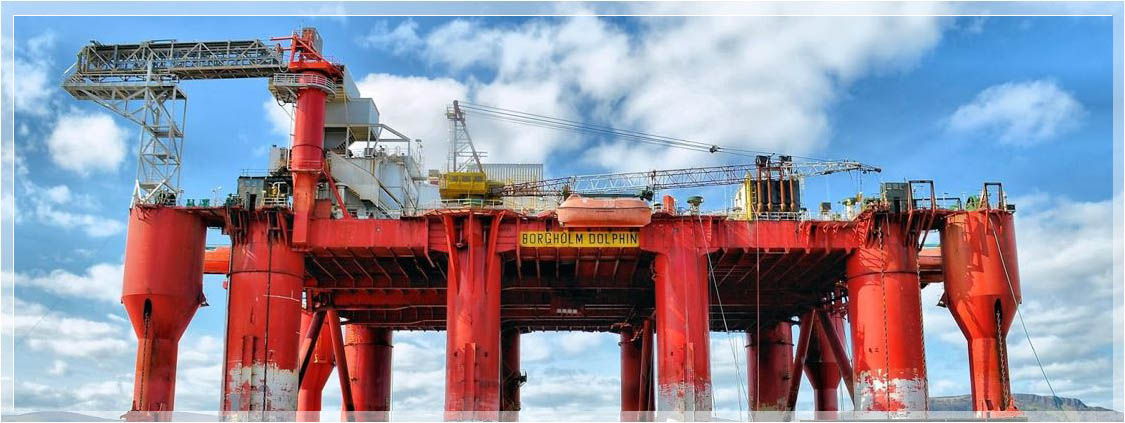 Commodities, such as Crude Oil, Gold, tea, and such, are physical substances and thus are more susceptible to the various effects of the natural and man-made world on them. Commodity traders all understand that they will experience more fluctuations in the prices of their holdings than they would if they held bonds and stocks, but many will argue that greater risk (fluctuation) equals greater rewards.
Looking at oil specifically, there are plenty of factors that impact the value of oil stocks in international exchanges and markets. These are what we will be looking at here. Before diving in, it’s prudent to keep in mind that commodity prices obey the simple cardinal rule of supply and demand – what we’re looking at here are some of the factors that influence the levels of either of these two essential qualities, in no particular order of importance.
OK. Let’s get into it.
Organization of Oil Producing Countries (OPEC)
Historically speaking, it cannot be denied that OPEC is the most substantial determinant of the prices of oil stocks in the world. The organization was created in order to introduce some measure of coordination in the global oil industry by bringing together different oil-producing countries so that they can regulate oil supply levels, thereby avoiding catastrophic collapses or unsustainable gains.
The 14 member countries are Angola, Algeria, Equatorial Guinea, Ecuador, Gabon, Iraq, Iran, Libya, Kuwait, Nigeria, Qatar, the United Arab Emirates, Saudi Arabia, and Venezuela. Combined, they have control over a whopping 40% of the world’s oil supply.
In keeping with their policies or global market conditions, they are able to come together and decide whether to increase or decrease the supply of oil on the world market, effectively influencing the price of oil stocks. With the decreased reliance on Middle Eastern oil by the USA in the wake of their recent advances in oil extraction, OPEC nations have less ability to cause international oil market catastrophes on their own.
 Trading Divergences for Beginners
As you begin to build experience and trade forex more frequently, it is common to engage with more advanced methods of trading. Top forex traders seek to eliminate the risk of trading as much as possible. This is done through extensive types of analysis, which can reveal some key information as to the direction of a particular market. One such indication is known as a divergence. Noting such an event will act as a clear sign to an experienced trader that they should take some action to alter their market position.
Identifying Divergences Correctly
At their very core, a divergence is a movement in the price action away from the movement as shown by a technical indicator. This indicator can be any you care to use in your technical market analysis. The important point is that when the indicator and the price action show conflicting signals, this is a divergence.
With forex trading practice, the aim is that traders can use such divergences to their advantage in reading the early trend of the market. Ultimately, this allows those who are experienced in trading forex to adjust their position and increase their chances of success. Common indicators that are used in the identification of divergences are RSI, MACD, CCI, and Stochastic Oscillator, although virtually any technical indicator will work for the purpose. Your forex broker should facilitate trading through a platform such as MetaTrader4 (MT4), where all of these indicators, and more, are readily available.
Examples of divergence could be when price action is showing a higher high or a lower low than your technical indicator. For experienced traders, with enough practice and time spent viewing various market trends, divergence can be quite easy to spot and help them in opening trade opportunities.
 How Does Inflation Affect the Exchange Rate?
The attractiveness of a particular currency in the forex market is determined by many things. The economic strength of a nation relative to another, however, is the most important factor. The strength of the economy itself is also affected by issues like inflation.
There are many factors in the economy that change inflation and thus affect the affairs in the forex market. The exchange rate of a particular currency is heavily influenced by how economic affairs within a country are managed. While many factors affect the exchange rate of a currency, none is quite as instrumental as inflation. Inflation directly affects the price of goods, and this has a direct impact on the value of the currency as well. So how exactly does inflation affect the exchange rate?
It changes the level of demand for the currency
Inflation causes goods from a particular country to become more or less attractive. The world is connected through trade. When the prices of commodities in a country increase, its goods become less desirable to those outside its borders. All countries exchange their currencies for others so that they can be able to trade effectively with their global partners.